Adhesive for Bathroom Tiles

Shop By
Shopping Options
Category
Colour
View as Grid List

6 Items

Set Descending Direction
per page

Adhesive For Bathroom Tiles

This page brings together tile adhesives suited to bathroom walls and floors, covering porcelain, ceramic and natural stone tile installations across new builds and renovations.

Products here include white and grey adhesives, flexible formulas for underfloor heating and thermal movement, and water-resistant options for wet rooms and shower enclosures.

Adding the right adhesive when ordering tiles keeps your whole project in one place. Browse our full bathroom tile range to find tiles that pair with the adhesives listed here.

How to choose bathroom tile adhesive

Bathrooms need flexible, water-resistant adhesives matched to the tile material, the substrate condition and whether the area will be regularly submerged or simply splashed.

  • Porcelain tiles: choose a flexible cement-based adhesive rated specifically for porcelain and low-porosity tile types — standard adhesives are often not sufficient.
  • Ceramic wall tiles: standard ready-mixed or powder adhesives can be suitable on stable, prepared walls — always check individual product details for confirmed compatibility.
  • Natural stone and quartz: use an appropriate powder adhesive and follow colour guidance; white adhesive is generally recommended under light-coloured or translucent stone.
  • Floor tiles and underfloor heating: a flexible, floor-rated adhesive labelled 'flexible' or 'S1' is the minimum requirement to handle thermal movement and foot traffic.
  • Showers and wet rooms: use water-resistant adhesive throughout and follow any priming or tanking guidance from an installer before tiling begins.

For specific suitability and coverage data, check the product description for options such as the Fast Set Flexible 1 Part Adhesive Grey before adding to your order.

Wall vs floor tile adhesive

Bathroom walls and floors place different demands on adhesive — getting the specification right for each surface prevents problems both during installation and in the years that follow.

  • Wall tile adhesive: non-slump or non-slip formulas hold tiles in position on vertical surfaces while the adhesive cures, preventing any downward sliding.
  • Floor tile adhesive: cement-based, flexible adhesives handle foot traffic, point loads and the expansion and contraction caused by underfloor heating systems.
  • Large-format tiles: choose an adhesive recommended for the specific tile size and back-butter each tile to guarantee full coverage behind it.
  • Wet rooms and showers: always follow the manufacturer's guidance on minimum coverage percentage and notch trowel size to avoid hollow voids forming behind tiles.
  • Mixing tile thicknesses: use the adhesive bed depth to level differences between tiles where the substrate is not perfectly flat from the outset.

For a full walkthrough of how adhesive, grout and surface preparation work together, the How To Tile A Bathroom guide is worth reading before you settle on quantities and products for your project.

Types of bathroom tile adhesive

Different adhesive types are formulated for different tile materials, surfaces and conditions — choosing the right category from the start avoids compatibility issues on site.

Adhesive type Key benefits Best for
Flexible cement-based powder Strong bond, porcelain-rated, available in standard and rapid-set versions Porcelain floors, large-format tiles and underfloor heating substrates
Standard cement-based adhesive Reliable all-round bond on prepared walls and floors without specialist requirements Ceramic wall and floor tiles in standard bathroom conditions
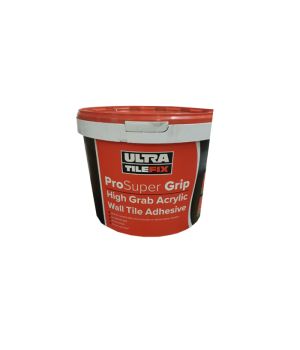
Ready-mixed wall adhesive No mixing needed, easy to apply straight from the tub in smaller areas Ceramic wall tiles in smaller bathroom areas; not suitable for porcelain floors
Specialist adhesive Formulated for challenging materials or substrates as specified on the product Natural stone, glass mosaic and non-standard or difficult substrate installations

Bathroom tile adhesive prices

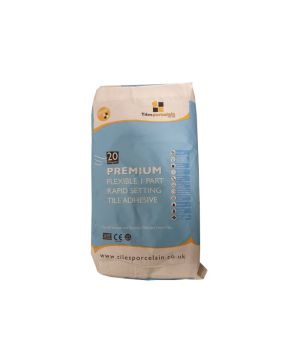
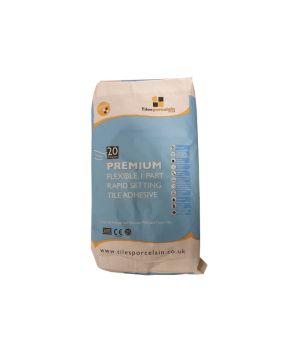
Powder adhesives are typically sold in 20kg bags, with coverage per m² varying according to trowel notch size, tile format and how level the substrate is before tiling begins.

Price band (per 20kg bag) Typical coverage Best used for
Around £15–£20 Roughly 4–5 m² with a standard notched trowel Flexible grey powder adhesive for most porcelain bathroom walls and floors
Around £20–£25 Similar coverage; higher bond strength and faster set speed Large-format tiles, rapid-set requirements and underfloor heating substrates
Around £10–£15 (tub) Approximately 3–4 m² of ceramic wall tiles per standard tub Ready-mixed adhesive for smaller ceramic wall tile areas only; not for floors

Always allow extra adhesive for uneven substrates, large-format tiles and inevitable on-site waste. Check each product's coverage guide before finalising your order quantity.

Using and storing bathroom tile adhesive

Following the manufacturer's instructions for mixing ratios, open time and pot life makes a meaningful difference to bond quality and the long-term stability of tiles in a wet environment.

  • Store unopened adhesive bags and tubs in a dry, frost-free location raised off the floor to prevent moisture being absorbed into the material.
  • Mix powder adhesives to a thick, creamy consistency using the exact water ratio stated on the bag — too much water significantly weakens the final bond.
  • Only mix what you can apply within the stated working time; any adhesive that begins to skin over should be discarded rather than reused.
  • Spread adhesive evenly with a notched trowel in a consistent direction and avoid dot-and-dab fixing, which leaves hollow voids directly behind tiles.
  • Clean tools and wipe any adhesive from tile faces promptly — dried adhesive on a polished surface is considerably harder to remove once it has cured.

Correct adhesive selection, careful mixing and consistent application give bathroom tiles the secure, long-lasting bond they need to hold well through years of daily use.

Bathroom tile adhesive FAQs

Q: Which adhesive should I use for porcelain bathroom tiles?

Use a flexible, cement-based powder adhesive rated for low-porosity porcelain. Grey suits most porcelain tiles; choose white adhesive under light-coloured or translucent tiles where the adhesive colour could show through.

Q: Can I use the same adhesive on bathroom walls and floors?

Some flexible cement-based adhesives are rated for both surfaces. Always check the product specification — floor-rated adhesives carry higher load and flexibility ratings than wall-only formulas, so they are not always interchangeable.

Q: Do I need flexible adhesive over underfloor heating?

Yes. Underfloor heating causes repeated expansion and contraction in the floor build-up. A flexible or S1-rated adhesive accommodates that movement and helps prevent tiles cracking or de-bonding over time.

Q: How much adhesive do I need per square metre?

A 20kg bag typically covers around 4–5 m² with a standard notched trowel. Large-format tiles, uneven substrates and back-buttering all reduce coverage, so always add at least 10% to your estimated quantity.

Q: How long before I can grout or use the bathroom after tiling?

Standard adhesives usually allow grouting after 24 hours. Rapid-set products can shorten this to a few hours. Always check the product's technical datasheet for confirmed set and cure times before bringing the bathroom back into use.

Spread The Cost With 0% Finance Easily With Klarna & ClearPay