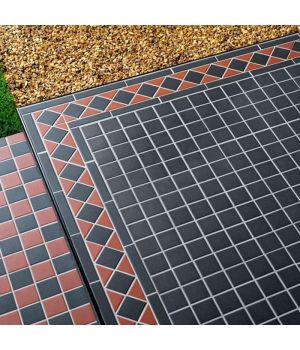
Victorian Floor Tiles

Shop By
Shopping Options
Category
Colour
View as Grid List

9 Items

Set Descending Direction
per page

Victorian Porcelain Tiles Ideas

This page brings together porcelain Victorian floor mosaics and chequerboard tiles — fields, borders and corners designed for traditional hallways, porches and period-style bathrooms and kitchens.

The range covers Black & White and Red & Black chequer mosaics, matching borders and corners, plus plain Victorian White, Red and Black mosaic sheets for complete period layouts.

Benefits include a classic period look, durable porcelain, suitability for busy entrances and heritage interiors, free samples and 0% finance. Browse our Victorian porch tiles or our full range of hallway tiles for coordinating options.

Victorian Floor Layouts: Fields, Borders and Corners Explained

Traditional Victorian floors are built from small tiles forming repeating geometric patterns — typically with contrasting borders and corner pieces that frame the whole layout cleanly.

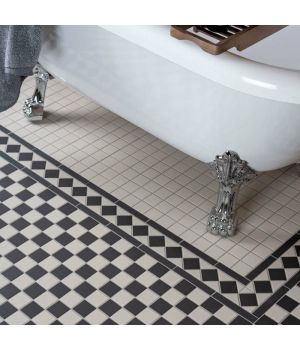
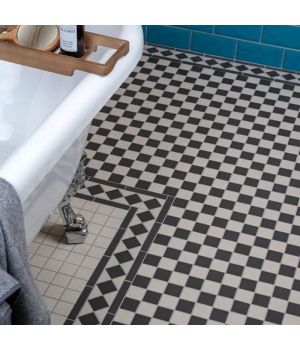
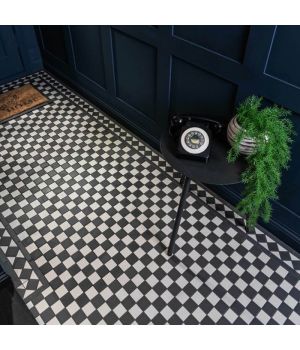
Black & White and Red & Black chequer mosaics serve as the main field for hallways, porches and small bathrooms, providing an immediately recognisable period look.

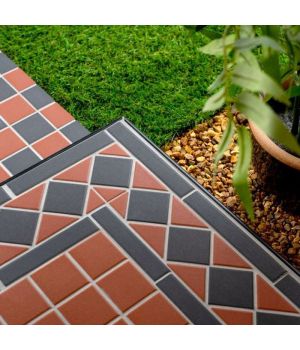
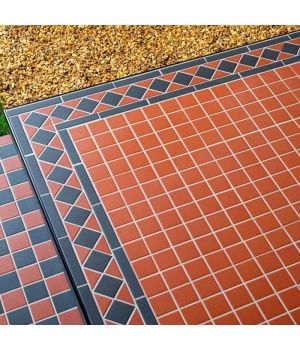
Matching borders and corner pieces frame the field and tie the floor together — particularly important in entrance halls and along covered paths where a finished edge is needed.

Plain Victorian White, Red and Black mosaics work as simple fields or solid accent areas around a patterned chequer, offering flexibility when planning a complete Victorian floor scheme.

  • The chequer mosaic forms the main body of the floor — add a border to frame it and corner pieces to finish junctions cleanly at doorways and thresholds.
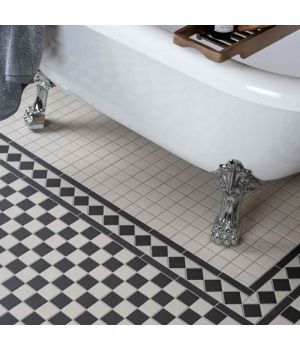
  • A contrasting border colour adds definition: a Black border around a Black & White chequer creates a crisp, period-accurate edge that reads well across the full floor area.
  • Plain White mosaics work well as a lighter outer margin between the patterned field and the skirting — a softer framing effect than running Black or Red to the wall.
  • For smaller spaces such as cloakrooms, a chequer field without a border can still look complete — the pattern does enough visual work without requiring a full framing treatment.
  • To vary the layout, use the chequer as a central panel and run a solid band of plain Black or Red mosaics as the outer field before adding the border.
  • Always establish the border perimeter first, then work the field inward — this keeps the pattern centred and reduces awkward cuts and misalignment at the walls.
  • Corner pieces are essential at inside corners, doorways and junctions — without them, mitre-cut borders rarely sit well and the finished floor loses its period character.

Where to Use Victorian Floor Tiles: Hallways, Bathrooms and Porches

Black & White chequer mosaics and matching borders are the natural choice for traditional hallways, kitchens and bathrooms where a crisp, period-accurate finish sets the tone.

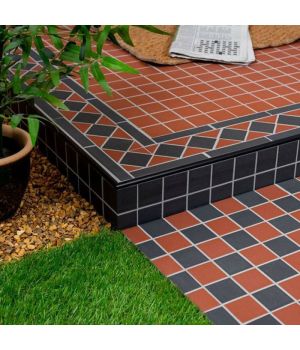
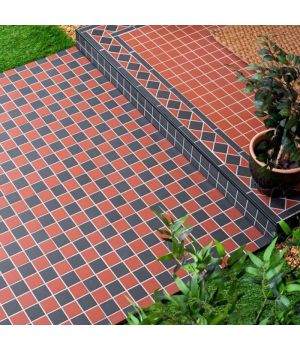
Red & Black and Red & White chequer mosaics alongside plain Red and Black options suit warmer, more dramatic entrance halls and covered porches where stronger visual character is the aim.

Victorian White mosaics create a lighter, more subtle look — worth comparing with other white floor tiles when planning a plain border between a patterned field and surrounding wall finishes.

For covered porches, paths and external steps, our Victorian porch tiles are rated for outdoor use and coordinate with this indoor range to create a complete, cohesive period entrance.

Victorian floors suit period terraces and Victorian-era houses naturally, but also work as a deliberate character feature in newer builds where period detail is introduced at the entrance.

  • In wet entrance areas, check the slip resistance specification before buying — small mosaic formats generally perform well in this regard, but always confirm for outdoor or covered porch use.
  • Place an entrance mat just inside the door to protect the chequer field from heavy traffic — mats also stop grit from being ground into grout joints over time.
  • Decide in advance how far the pattern runs into the hallway — stopping at a doorway threshold looks more intentional than carrying the chequer into an adjoining room.
  • Running the same border and field combination from the front door to a rear hallway creates visual continuity and makes even a narrow corridor feel considered and complete.
  • In bathrooms, keep Victorian mosaic on the floor only — plain or complementary wall tiles prevent the space from feeling like a pattern collision between floor and wall surfaces.
  • For contemporary homes, a Black & White field with a single plain Black border is the cleanest Victorian reference — characterful without looking like a period reproduction.
  • Browse our hallway tiles range for coordinating floor options across different hallway styles and proportions.

Chequer Field, Plain Mosaic or Border and Corner — What Does Each Element Do?

A complete Victorian floor typically combines all three elements — here is a concise breakdown of the role each one plays in the layout.

Tile type Best for Key benefit
Chequer mosaics (Black & White, Red & Black, Red & White) Main floor field in hallways, porches and bathrooms Creates the distinctive Victorian geometric pattern across the floor
Plain mosaics (Victorian White, Red, Black) Border bands, outer margins and simple solid field fills Versatile; frames the chequer or creates a clean, plain field
Borders and corners (matching chequer sets) Perimeter framing and doorway and threshold junctions Finishes the floor professionally with correct period detail

Victorian Mosaic Floor Tile Prices: UK Budget Guide

Plain Victorian mosaics — White, Red and Black — are available at around £85.99 per m², making them the most accessible element when costing a full Victorian floor layout.

Chequer field mosaics sit at approximately £91.00 per m². Border and corner pieces are priced at around £384–£499 per m², reflecting the intricate mosaic format and the limited coverage each sheet provides.

Always add 10–15% for cuts, pattern repeats and wastage — especially around doorways where the chequer meets thresholds. Factor in adhesive, grout, levelling and professional fitting, as intricate Victorian layouts take more time to install than standard formats.

Price band Approx. price per m² Best suited to
Plain Victorian mosaics (White, Red, Black) £85.99 Fields, border bands and accent areas within a layout
Chequer field mosaics (Black & White, Red & Black) £91.00 Main hallway, bathroom and porch floor fields
Border and corner sets £384–£499 Perimeter framing, doorway junctions and full period layouts
Full layout with wastage and fitting Add 10–15% plus adhesive, grout and labour All Victorian mosaic floors including porch and hallway installations

Victorian Floor Tile FAQs

How do I plan a Victorian chequerboard hallway floor?

Establish the border perimeter first, then lay the chequer field inward from the edges. This keeps the pattern centred and reduces awkward cuts at the walls and doorways.

What is the difference between field mosaics, borders and corners?

Field mosaics cover the main floor area. Borders run around the perimeter to frame the field. Corner pieces finish junctions cleanly at inside corners, doorways and thresholds.

Are Victorian porcelain floor tiles suitable for outdoor porches?

The indoor Victorian mosaic range is designed for interior use. For covered porches, paths and steps, use an outdoor-rated Victorian porch tile specified for frost resistance and external conditions.

Do Victorian floor tiles work in modern homes?

Yes. A Black & White chequer with a simple plain border makes a strong period reference without feeling heavy — effective as a character feature in contemporary builds and extensions.

Can I use Victorian mosaic tiles with underfloor heating?

Yes. Porcelain conducts heat well and suits electric underfloor heating systems. Always follow your installer's guidance on adhesive specification and allow proper ramp-up time after installation is complete.

Spread The Cost With 0% Finance Easily With Klarna & ClearPay