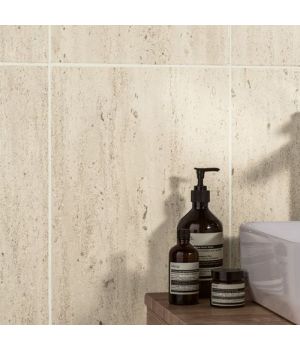
Travertine Wall Tiles
-
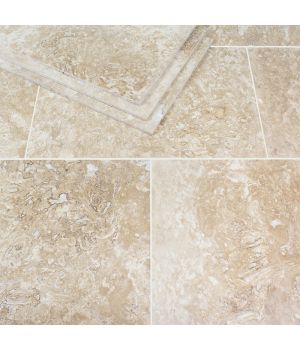
Travertine Tiles Classic Honed & Filled£ 31.99 /m2 Regular Price £40.00 /m2 -
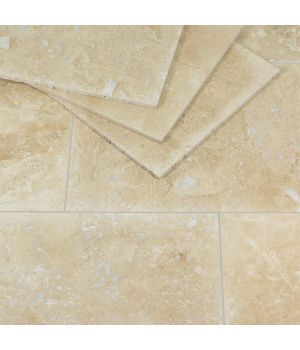
Travertine Tiles Classic Light Honed & Filled£ 33.99 /m2 Regular Price £40.00 /m2
Travertine Natural Stone Tiling Ideas
This page showcases a curated selection of natural travertine wall tiles in soft cream and warm beige tones — quarried stone that brings genuine warmth and natural movement to interior walls.
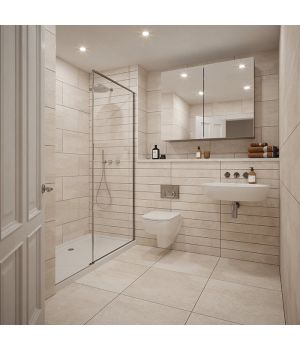
The honed and filled travertine tiles here offer a smooth, refined surface with the character of real stone, making them a considered choice for feature walls in bathrooms, kitchens, and living areas. For a full room scheme, see more bathroom wall tile options to pair alongside travertine features.
Travertine has been used in interiors for centuries — it sits as comfortably in a contemporary bathroom as it does in a traditionally styled hallway, and its neutral palette makes it one of the most adaptable natural stones available.


Honed and filled travertine walls: finish and care
Travertine forms with natural voids and pits running through the stone — the result of gas bubbles present during its creation. In honed and filled travertine tiles, those voids are filled with a cementitious compound before the surface is ground flat and honed to a smooth, satin finish. The result is a tile that retains the natural veining and warm colour variation of travertine, while offering a far more practical surface for wall use.
The honed finish sits between polished marble and a fully matt surface. It has a gentle sheen that catches light without the hard reflectivity of a polished stone — well suited to bathrooms with natural light, or living areas where a softer, more organic wall finish is preferred over high-gloss tile options.
Because the surface is filled and smooth, everyday cleaning is considerably easier than with unfilled travertine, where open pits can collect soap residue and moisture. A damp cloth wipes the surface clean quickly, and there are no exposed pits to harbour grime in regularly splashed areas near baths, basins, or kitchen sinks.
To see how honed travertine sits alongside other surface options you might choose elsewhere in the home, our guide to different tile finishes covers matt, gloss, and lappato in a useful comparative format.
- The honed surface has a softer sheen than polished stone — it reflects light gently rather than creating strong glare on a wall surface.
- Comfortable in bright, naturally lit bathrooms and kitchens where a high-gloss finish might feel overpowering.
- Easier to wipe down than unfilled travertine — the smooth, filled surface does not trap soap, grease, or moisture in open voids.
- Still shows the natural veining, tonal variation, and organic character that makes travertine visually distinctive.
- The warm cream and beige palette works with a wide range of fittings, from chrome and brushed nickel to brass and matte black.
- Honed travertine ages gracefully — unlike some manufactured finishes, the surface develops patina rather than simply wearing out.
Practical tips for travertine wall tiles
- Seal tiles and grout lines as recommended before use, and re-seal periodically to maintain protection in wet and splash zones.
- Wipe walls down after showers and cooking splashes to prevent residue building up on the honed surface over time.
- Use a pH-neutral stone cleaner for regular maintenance — acidic or alkaline products can degrade the sealer and dull the honed finish.
- Avoid abrasive pads and harsh scouring products, which can scratch or mark the smooth surface of honed travertine.
- Inspect the seal in wet areas periodically — if water stops beading on the surface, it is time to re-seal.
- Order free samples before purchasing — tonal variation in natural travertine means each batch has its own character, best assessed in your actual room.
Travertine wall tiles versus porcelain and ceramic
| Wall tile type | Best for | Key benefits |
|---|---|---|
| Natural travertine wall tiles | Feature walls, luxury bathrooms, living areas | Warm natural stone character, timeless appeal, unique veining |
| Porcelain wall tiles | Full wall coverage, wet rooms, busy bathrooms | No sealing needed, highly durable, wide design range |
| Standard ceramic wall tiles | Kitchens, cloakrooms, budget wall projects | Lightweight, cost-effective, easy to install and maintain |
Prices for travertine wall tiles
Natural travertine wall tiles sit in the mid to premium price bracket compared with standard ceramic — a reflection of their natural stone status, the processing required to hone and fill them, and the enduring appeal that keeps demand for travertine consistent year after year.
| Range | Typical wall use | Indicative price band |
|---|---|---|
| Entry-level travertine wall tiles | Accent walls, bath surrounds, niches | From around £30–£45 per m² |
| Mid-range honed and filled travertine | Full bathroom walls, kitchen features | From around £45–£65 per m² |
| Premium character travertine | Luxury feature walls, high-end interiors | From around £65 per m² upwards |


Travertine wall tiles FAQs
Are travertine wall tiles suitable for shower walls and wet rooms?
Many honed and filled travertine tiles can be used in shower areas when correctly sealed. Always check the individual product listing to confirm wet zone suitability before purchasing.
Do travertine wall tiles need sealing, and how often?
Yes. Natural travertine is porous and should be sealed before installation. Re-sealing every one to two years in wet areas keeps the surface protected and looking its best.
Can travertine wall tiles be used behind a cooker or sink?
Yes. Sealed travertine handles everyday kitchen splashes well and works as a splashback behind sinks. Avoid prolonged exposure to strong acids such as lemon juice or vinegar.
How easy is it to keep travertine wall tiles clean?
Straightforward with the right products. A damp cloth and a pH-neutral stone cleaner is all that is needed for routine cleaning — no specialist equipment required.
Will travertine wall tiles date quickly or go out of style?
Travertine has been used in interiors for centuries and remains popular across both traditional and contemporary schemes — it is one of the more enduring natural stone choices available.