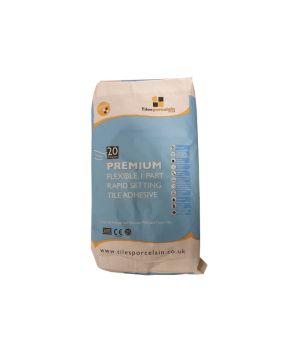
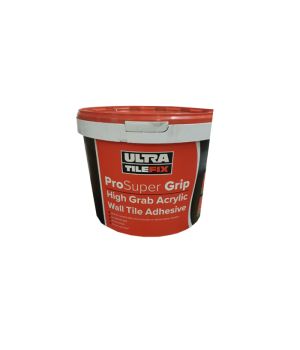
Adhesive For Wall Tiles
Adhesive For Tiling Walls
Wall tile adhesive bonds tiles permanently to vertical surfaces — and choosing the wrong type is one of the most common reasons tiles fail.
This page shows professional-grade adhesives suitable for porcelain, ceramic and natural stone wall tiles. Key requirements for wall applications are flexibility to handle minor movement, waterproof properties for wet areas, and sufficient vertical grab to hold tiles firmly while they cure.
Types of Wall Tile Adhesive
The format you choose affects working speed, coverage and suitability. For guidance on the tiling process itself, see our how to tile a wall guide.
- Ready-mixed adhesive: pre-mixed and convenient for small jobs and first-time tilers; lower coverage rate per tub.
- Powder adhesive: mixed with water on site; better coverage rates and generally preferred by professional tilers.
- Rapid-set adhesive: cures faster than standard — useful for large-format tiles that need firm support quickly.
- Flexible adhesive: contains polymer additives to handle minor movement; essential where underfloor heating is present.
- Waterproof adhesive: formulated for wet areas — showers, wet rooms and steam rooms where moisture is constant.


Choosing Adhesive for Different Wall Tiles
Tile material and size both determine which adhesive is appropriate. Using the wrong product risks poor bonding, slippage or staining — particularly with natural stone.
- Porcelain wall tiles have a dense, low-absorption body — they need a high-grab porcelain adhesive, not a basic ceramic adhesive.
- Large-format 600x1200mm tiles require rapid-set, non-slip adhesive to prevent the tile sliding down the wall before curing.
- Natural stone: always use white adhesive — grey or coloured adhesives can bleed through translucent stone and discolour the face.
- Ceramic tiles: a standard flexible adhesive handles most ceramic wall applications without issue.
- Heavy tiles of any type: choose an adhesive with enhanced vertical grab and check the maximum tile weight per m² it's rated for.
Coverage & Application Guide
Correct trowel technique is as important as adhesive choice. Notched trowels create ridges that compress fully when the tile is pressed in, giving complete contact across the back of the tile.
- Coverage: typically 3–5 m² per 20kg bag, depending on trowel notch size and tile format.
- Trowel size: 6mm notched for smaller tiles; 10mm notched for large-format tiles to ensure adequate adhesive depth.
- Working time: most adhesives skin over in 20–30 minutes — only spread what you can tile within that window.
- Curing time: allow 24–48 hours before grouting; longer in wet areas or where heavy tiles have been used.
- Surface prep: walls must be clean, dry, structurally sound and primed if the substrate is porous or dusty.
Adhesive Type Comparison
| Adhesive Type | Key Benefits | Best For |
|---|---|---|
| Ready-Mixed | No mixing; quick to start; beginner-friendly | Small splashbacks, repairs, ceramic tiles |
| Powder (Standard) | Better coverage; cost-effective on larger projects | General wall tiling, porcelain, ceramic |
| Rapid-Set | Fast cure; supports heavy tiles immediately | Large-format tiles, time-sensitive installs |
| Flexible / Waterproof | Handles movement; fully waterproof bond | Showers, wet rooms, underfloor heating areas |
Where to Use Wall Tile Adhesive
Different rooms and substrates have different demands. Matching the adhesive to the environment is as important as matching it to the tile.
- Bathroom walls and shower enclosures: waterproof flexible adhesive is the correct choice — no exceptions in wet zones.
- Kitchen splashbacks: standard or rapid-set adhesive is suitable; waterproof is advisable directly behind a sink.
- Living room feature walls: any quality flexible adhesive works well in dry interior conditions.
- Exterior walls: frost-resistant, weatherproof adhesive rated for outdoor use is essential — interior adhesives will fail.
- Underfloor heating areas: flexible adhesive only — standard adhesive cracks as the substrate expands and contracts with heat.
Pricing Guide for Wall Tile Adhesive
Powder adhesives offer significantly better value per m² on larger projects compared with ready-mixed tubs. Coverage varies by trowel size and tile format, so calculate by project area rather than tile count.
Budget ready-mixed runs £8–£12 per 10kg tub, covering around 2–3 m². Standard powder adhesive sits at £10–£18 per 20kg bag for 4–5 m² coverage. Rapid-set and flexible options range from £15–£25 per 20kg bag, with professional-grade adhesives reaching £20–£35 per 20kg bag for maximum strength and flexibility.
Common Adhesive Mistakes to Avoid
Most wall tile failures trace back to preparation or product errors rather than the tile itself. These are the ones that come up most often.
- Wrong trowel size: too small a notch leaves insufficient adhesive, resulting in hollow spots and eventual tile failure.
- Spreading too much at once: adhesive skins over quickly — work in sections you can comfortably tile within the working time.
- Skipping the transfer check: lift a tile shortly after pressing to confirm full adhesive contact across the back face.
- Poor surface prep: dusty, damp or unpainted plaster reduces bond strength significantly — prime porous walls first.
- Using standard adhesive in wet areas: it will eventually fail in a shower environment regardless of how well it was applied.
- Grouting too soon: adhesive that hasn't fully cured will flex under grouting pressure, causing tiles to shift or crack.


Frequently Asked Questions
What's the difference between wall tile adhesive and floor tile adhesive?
Wall tile adhesive has higher vertical grab to stop tiles slipping before curing. Floor adhesive is formulated for compression resistance under foot traffic — the two are not interchangeable.
How much adhesive do I need for my wall tiling project?
Calculate your wall area in m², then divide by the coverage rate on the adhesive bag. Always add 10–15% for waste and uneven surfaces.
Can I use ready-mixed adhesive for large-format wall tiles?
No. Ready-mixed adhesive lacks the grab and support needed for heavy large-format tiles. Use a rapid-set or high-grab powder adhesive rated for the tile weight.
How long should I wait before grouting wall tiles?
A minimum of 24 hours for standard adhesive in dry areas; 48 hours or longer in wet rooms, or where large or heavy tiles have been used.
Do I need waterproof adhesive for all bathroom walls?
Not necessarily for every surface. Waterproof adhesive is essential in shower enclosures and wet rooms; standard flexible adhesive is adequate for dry bathroom walls away from direct water contact.