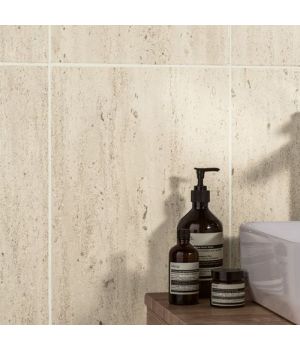
Travertine Kitchen Tiles

Shop By
Shopping Options
Category
Colour
View as Grid List

6 Items

Set Descending Direction
per page

Travertine Kitchen Tiles in Natural Stone

Travertine kitchen tiles bring warm, natural stone character to floors and walls in soft beige and cream tones. Browse the complete kitchen tiles range to see how travertine compares with other materials.

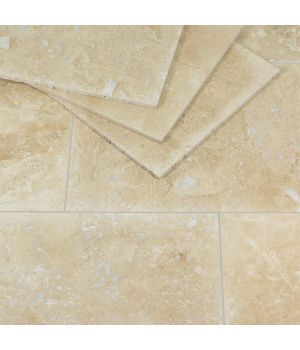
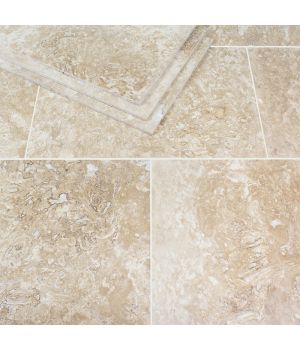
Honed and filled for a smooth, practical finish, each travertine tile carries its own natural variation — no two floors look exactly alike.

Why Choose Travertine for Your Kitchen?

Travertine is a natural limestone formed over centuries, and its warm cream and beige tones bring a softness to kitchen floors and walls that manufactured tiles in similar colours rarely match. In open-plan kitchen-diners, the natural variation across the surface gives large floor areas a visual richness that keeps them from looking flat or repetitive.

Honed and filled travertine — the standard specification for kitchen use — has had its characteristic pits and pores filled and its surface ground smooth, giving a far more practical kitchen surface than unfilled travertine while retaining the stone's natural warmth. The filled finish also makes cleaning considerably more straightforward.

Travertine needs sealing before use and periodic resealing in kitchens, and benefits from a careful cleaning routine that avoids acidic products. In return, it delivers a natural stone finish that genuinely improves with age. For the full range of travertine formats and finishes, see the travertine tiles collection.

  • Warm cream and beige tones — sits naturally with wood, white and neutral kitchen cabinetry
  • Honed and filled finish gives a smoother, more practical surface for kitchen floors
  • Natural variation across tiles adds character that no porcelain replica fully replicates
  • Suitable for kitchen floors, splashbacks and open-plan kitchen-diner spaces

Style, Tone and Format Choices

The Classic Honed & Filled range sits in a mid-depth beige — a warm, settled tone that suits traditional and country kitchens alongside painted or wood cabinetry. Classic Light Honed & Filled is a cooler, lighter cream that reads closer to white in brighter rooms, making it a better match for modern kitchens with grey or white units where a deeper beige might feel out of place.

Premium Classic Travertine Honed & Filled and Premium Silver Aurelius Travertine offer more distinctive veining and colour movement — the Silver Aurelius in particular has an unusual warm silver-grey blend that separates it from the standard beige palette. These suit kitchens where the floor is meant to be noticed. For a fuller picture of how travertine performs as a flooring material, travertine flooring covers format options and installation considerations in detail.

The standard 610x406 (nominal 600x400) format works well in a running bond or brick-bond pattern on kitchen floors — a layout that suits the natural variation in the stone — and can also be used vertically on feature walls where the format adds proportion.

  • Classic beige travertine: pairs best with white, cream or oak kitchen cabinetry
  • Classic Light: suits grey, stone or pale modern units in brighter kitchens
  • Premium Silver Aurelius: works with contemporary kitchens where the floor anchors a neutral scheme

Natural Travertine vs Travertine-Effect for Kitchens

Natural travertine — honed, filled and sealed — is the premium kitchen floor and wall choice. Each tile carries genuine veining and the subtle variation that makes a stone floor feel like a long-term investment rather than a surface finish. It requires sealing before installation, resealing at intervals and a cleaning routine that keeps acidic or harsh products away from the stone.

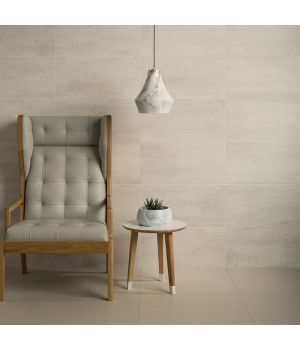
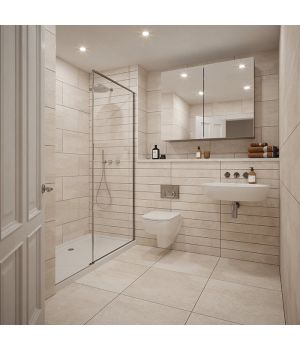
For family kitchens where maintenance simplicity matters more than authentic stone, travertine-effect ceramic and porcelain options deliver a convincing visual result with none of the upkeep. Travertine effect wall tiles in a satin ceramic finish work particularly well alongside real travertine floors — real stone underfoot, easier-care ceramic on the walls.

  • Natural travertine: genuine stone, unique variation, needs sealing — best for premium kitchen floors
  • Travertine-effect ceramic: no sealing, consistent thickness, easier to maintain — ideal for kitchen walls
  • Combining both: natural stone floor with travertine-effect wall tiles balances character and practicality

Travertine Kitchen Tile Comparison

Three key travertine products for kitchens, compared by tone, finish and most suitable application.

Tile Tone & Finish Best Kitchen Use
Travertine Tiles Classic Honed & Filled Warm mid-beige, smooth honed surface Main kitchen floor in traditional or country scheme
Travertine Tiles Classic Light Honed & Filled Cool light cream, smooth honed finish Kitchen floor in modern, grey or pale-unit kitchens
Premium Silver Aurelius Travertine Honed & Filled Warm silver-grey blend, distinctive veining Feature floor or wall in contemporary kitchen

Travertine Kitchen Tile Prices

Travertine sits in the mid-to-premium bracket, with current stock heavily discounted while available — worth checking individual product pages for live prices.

Price varies by grade and format, from value-range options through to premium stone with more distinctive veining.

Price Band Approx. £/m² Typical Project
Value Travertine £20.00–£30.00/m² Compact galley floor or small feature wall
Core Kitchen Travertine £31.99–£35.00/m² Full kitchen floor or open-plan kitchen-diner
Premium Travertine £35.00–£45.00+/m² Premium kitchen floor or statement feature wall

Travertine Kitchen Tiles FAQs

Q: Is travertine suitable for kitchen floors and walls in a busy family kitchen?

Yes, when honed, filled and properly sealed. It handles everyday kitchen use well, though it needs more care than porcelain and benefits from prompt spill cleaning.

Q: How often does travertine need sealing in a kitchen and what type of sealer should I use?

Seal before installation and after grouting. In a busy kitchen, reseal every one to two years using a penetrating impregnating sealer rather than a surface coating.

Q: How easy is travertine to clean and which products are safe to use?

Use a pH-neutral stone cleaner and soft cloths for routine cleaning. Avoid acidic products — vinegar, lemon-based cleaners and bleach all risk etching or staining travertine surfaces.

Q: Does travertine work with underfloor heating?

Yes — travertine is compatible with underfloor heating when installed using a flexible, stone-compatible adhesive and following the heating system manufacturer's guidance for temperature limits.

Q: When should I choose travertine-effect tiles instead of natural travertine for a kitchen?

If you want a similar look with no sealing and minimal maintenance, travertine-effect ceramic or porcelain is the more practical choice — especially for walls and family kitchen floors.

Spread The Cost With 0% Finance Easily With Klarna & ClearPay