Wood Effect Bathroom Tiles

Shop By
Shopping Options
Category
Rating
View as Grid List

Items 1-24 of 28

Set Descending Direction
Page
per page

Designing Your Bathroom With A Wood Theme

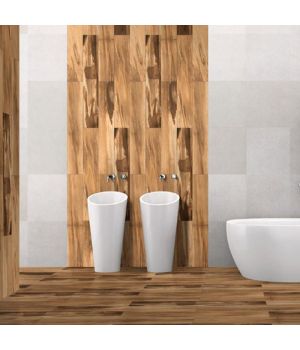
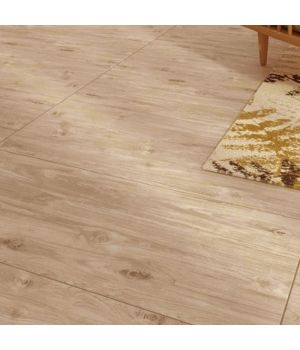
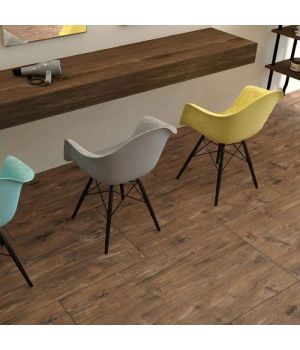
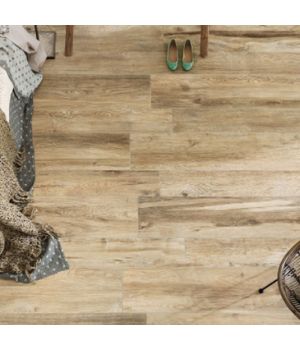
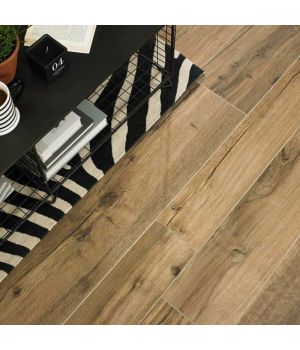
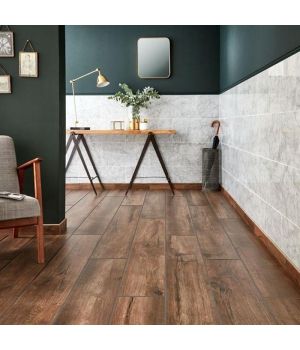
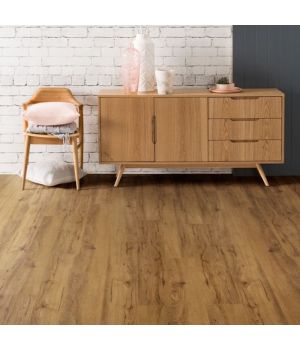
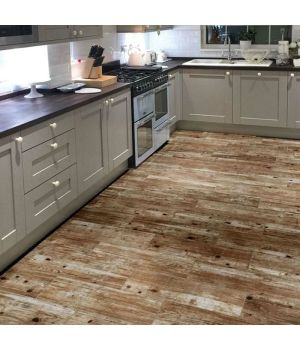
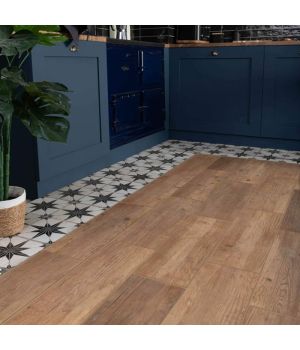
This page brings together wood-effect porcelain tiles for bathroom floors and walls — Alder Brown, Pearl Honey, Curly Oak, Hickory Gris, Mumble and Grand Wood — from our wider bathroom tiles range.

Tones run from light oak and whitewashed boards through to dark chocolate — all with the water resistance and durability of porcelain.

Free cut samples and 0% finance are available to help you compare wood tones and plan your project with confidence.

Why choose wood effect tiles for your bathroom?

Wood-effect porcelain gives the warmth and character of timber with the water resistance, durability and easy cleaning that real wood can't deliver in a wet environment.

From bath panels to shower floors, these tiles work across more surfaces than most bathroom materials. The full format and finish options are covered on our wood effect tiles material hub.

  • The look of oak, walnut and rustic boards without swelling, warping or specialist treatment in wet rooms.
  • Suited to bathroom floors and can run across feature walls and bath panels too.
  • A warm, textured surface that pairs well with white, cream or grey wall tiles.
  • Anti-slip finishes available — including Mumble Honey Anti Slip — for busy family bathrooms and wet zones.

Wood effect bathroom tile ranges on this page

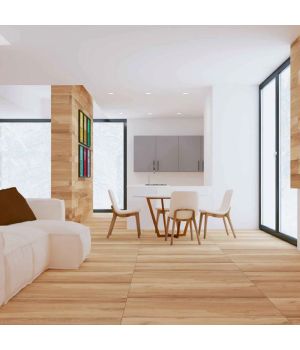
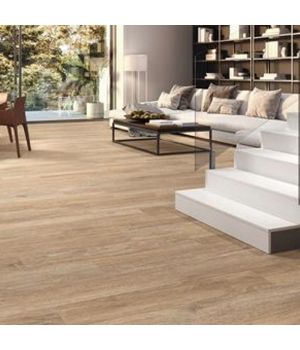
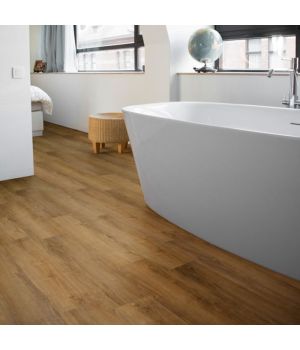
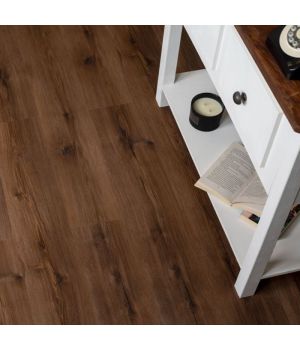
The range here covers five distinct tone groups — rich brown planks to whitewashed Scandinavian boards — with a spread of plank sizes and surface textures within each group.

For a popular mid-brown starting point, our Tarima Roble wood effect tiles represent a classic plank format that coordinates well with most bathroom colour schemes.

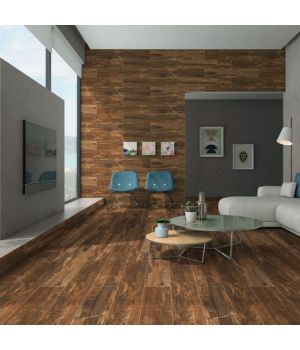
  • Classic brown woods: Alder Brown, Impact Brown, African Choco and Grand Rustic Chocolate — rich brown planks for cosy, warm bathrooms.
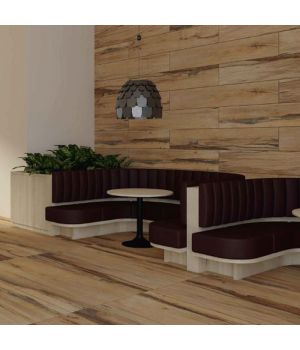
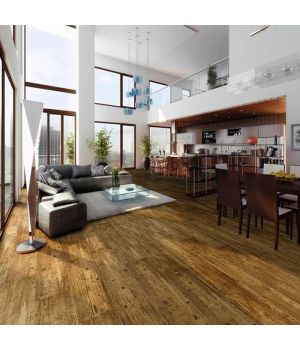
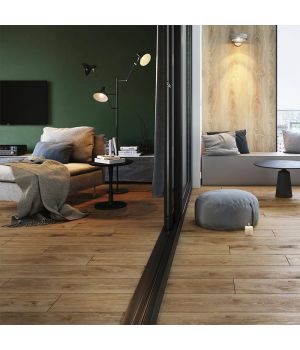
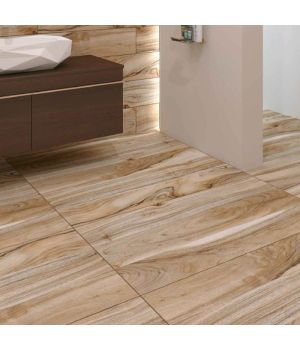
  • Honey and mid-oak tones: Pearl Honey, Cherry Honey, Curly Oak Honey, Alder Natural and Grand Prime Grey for a cooler mid-tone.
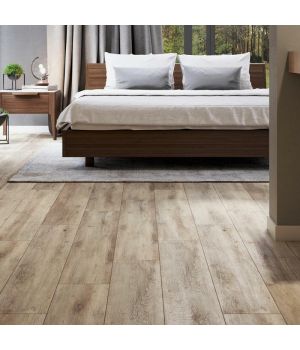
  • Light and whitewashed looks: Curly Oak White and Mumble Beige Light Oak for airy, Scandinavian-style bathrooms.
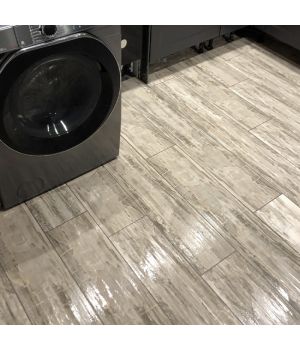
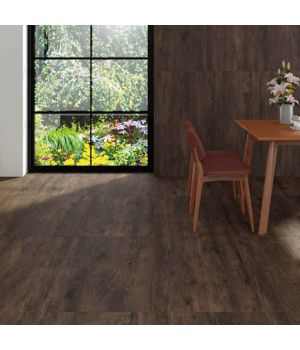
  • Greys and dark woods: Hickory Gris, Noicy Grey, Mumble Grey and Mumble Wenge for contemporary, cool-toned schemes.
  • Anti-slip bathroom options: Mumble Honey Wood Effect Anti Slip for safer wet-area flooring.

How to style a wood effect bathroom

Wood-effect tiles suit a range of bathroom styles — from natural, earthy retreats to sharp modern schemes — and the tone chosen does most of the design work.

Our wood effect bathroom ideas article shows five finished rooms using these tiles — a good reference before committing to a layout or colour scheme.

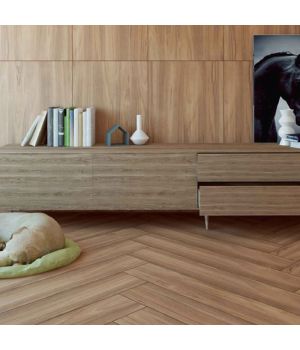
  • Lay planks in a straight or brick-bond pattern to replicate the natural rhythm of real floorboards.
  • Run wood-effect tiles from the main bathroom floor into shower areas (where product-rated) for a continuous floor finish throughout.
  • Use lighter tones like Curly Oak White or Mumble Beige to keep smaller bathrooms feeling bright and open.
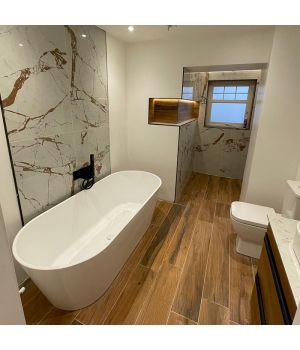
  • Pair warm woods with white or cream walls and greenery for a spa feel, or with grey tiles and black fittings for a modern look.

Wood effect bathroom tile options at a glance

Look Best for Key benefits
Warm brown boards Cosy, traditional bathrooms Classic wood look, inviting and timeless.
Honey and mid-oak Family bathrooms and en-suites Versatile, warm, easy to pair with many colours.
Light oak / whitewashed Small or low-light bathrooms Bright, airy, Scandi-style feel.
Grey and dark woods Modern and monochrome schemes Contemporary, smart, works with black fittings.
Anti-slip wood effect Wet rooms and busy floors Extra grip, practical for everyday use.

Practical tips for wood effect bathroom tiles

Wood-effect porcelain performs well in bathrooms, but format, slip rating and installation approach all need checking before ordering — particularly in shower areas and wet rooms.

Our wood effect tiles vs natural wood article sets out the practical case for porcelain over timber in bathrooms clearly — worth reading before committing to either.

  • Check each tile's suitability for floors, walls or both; many ranges are floor-rated and extend into shower areas when correctly installed.
  • Choose anti-slip or matt finishes — such as Mumble Honey Anti Slip — for main bathroom floors and wet zones.
  • Plan your plank layout to avoid narrow cuts at doorways and shower edges; dry-lay before fixing where possible.
  • Wood-effect porcelain doesn't need sealing and is simple to clean — considerably lower-maintenance than real timber indoors.

Wood effect bathroom tile prices

Many Alder, Pearl, Noicy and Curly Oak tiles here are reduced to around £17.97 per m² from £25–£30, while the Grand ranges sit around £29.99 per m² and the premium Mumble options around £39.97 per m².

The price bands below give a useful overview of what to expect across the range.

  • Entry-level wood effect porcelains: Alder, Pearl, Noicy, Curly Oak and similar around £18–£25 per m² in sale.
  • Mid-range rustic and prime planks: Grand Rustic Chocolate and Prime Grey around £30–£35 per m².
  • Premium Mumble ranges: Mumble Beige, Honey, Grey and Wenge around £38–£45 per m².

Free samples let you compare wood tones at home before committing, and 0% finance is available to spread the project cost.

Wood effect bathroom tiles FAQs

Are wood effect tiles suitable for wet rooms?

Many wood-effect porcelains work well in wet areas when correctly installed and when an appropriate slip-resistance rating is chosen for the specific zone.

Do wood effect tiles feel cold underfoot?

Porcelain can feel cooler than real timber, but pairs well with underfloor heating. A bath mat also addresses this effectively in colder months.

Can I use wood effect tiles on bathroom walls as well as floors?

Many ranges here are dual-rated for walls and floors. Check the individual product page to confirm suitability before planning wall or bath panel use.

Do wood effect tiles need sealing?

Glazed porcelain wood-effect tiles generally don't need sealing — a practical advantage over real timber, which requires regular treatment in wet environments.

How realistic is the wood effect?

Modern printing and surface texture create convincing grain patterns and colour variation, particularly across mixed-face ranges where each tile face differs slightly.

Spread The Cost With 0% Finance Easily With Klarna & ClearPay