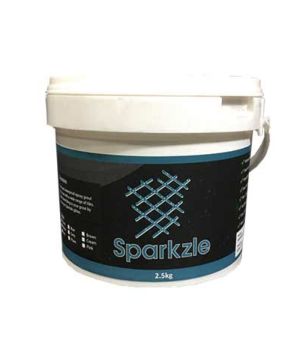
Grout For Wall Tiles
Grout For Tiling Walls
Wall tile grout fills the joints between tiles, locking them in place and protecting the substrate from moisture. Choosing the right grout matters as much as choosing the right tile.
This page shows 7 professional grout products — including epoxy grout with glitter for decorative feature walls. Key requirements for wall applications are waterproof performance, mould resistance, good colour match and compatibility with your joint width.
Types of Wall Tile Grout
Grout formulation determines how it performs over time — particularly in wet environments. Spending a little more on the right type avoids problems that cement-based grout can't handle.
- Cement-based grout: traditional, affordable and available in a wide colour range — suitable for most dry and low-moisture wall applications.
- Epoxy grout: completely waterproof, highly stain-resistant and chemically tough — the correct choice for showers, wet rooms and kitchen splashbacks.
- Pre-mixed grout: ready to use straight from the tub — convenient for small repairs or splashback projects where mixing isn't practical.
- Flexible grout: polymer-modified to handle minor movement — use wherever underfloor heating is present beneath a tiled wall.
- Anti-mould grout: contains biocides that inhibit mould growth — a practical upgrade for bathrooms that see heavy steam and condensation.
- Grout with glitter additive: epoxy-based with decorative sparkle — suited to feature walls, alcoves and splashbacks where a finishing detail matters.
Epoxy grout carries a higher upfront cost than cement-based alternatives, but its lifespan and performance in demanding environments usually justifies the difference.


Choosing Grout Colour for Wall Tiles
Grout colour shifts how the finished wall reads — sometimes as much as the tile itself. This is worth thinking through before ordering, since changing grout colour after installation is a significant job. Porcelain tiles in particular benefit from careful colour matching, as their hard, dense surfaces make any grout line more visible.
- Matching grout to tile colour: minimises visible joints and lets the tile surface read as a continuous plane.
- Contrasting grout: defines each tile individually — works well with geometric patterns and subway tiles where the grid is part of the design.
- White grout: brightens a space but shows dirt and discolouration more quickly than mid-toned alternatives.
- Grey grout: versatile and forgiving — holds its appearance longer than white and suits most tile colours and formats.
- Dark grout: makes a strong statement with lighter tiles; shows less staining but can make a small room feel heavier.
- Glitter grout: catches light in feature areas and alcoves — a subtle version adds interest without looking overdone.
Grout Joint Widths for Wall Tiles
Joint width affects both the look of the finished wall and how much grout you'll need to order. Wider joints require more grout and add to the total project cost.
- Narrow joints (1–2mm): clean, contemporary finish for rectified tiles where edges are precisely cut and consistent.
- Standard joints (2–3mm): the most common choice for wall tiles — balances appearance with practical grouting ease.
- Medium joints (3–5mm): suits handmade, rustic or slightly irregular tiles where a tighter joint would look forced.
- Wide joints (5–10mm): traditional for metro and subway tiles, particularly in brick-bond layouts where the joint is part of the aesthetic.
- Mosaic tiles: typically 1mm joints requiring a fine-grain specialist grout — standard grout will not flow into very narrow gaps correctly.
Grout Types Compared
| Grout Type | Key Benefits | Best For |
|---|---|---|
| Cement-Based Grout | Affordable; wide colour choice; easy to apply | Dry walls, living areas, low-moisture kitchens |
| Epoxy Grout | Fully waterproof; stain-resistant; long-lasting | Showers, wet rooms, kitchen splashbacks |
| Flexible Anti-Mould Grout | Handles movement; biocide protection against mould | Bathrooms, steam rooms, underfloor heating areas |
| Epoxy Grout with Glitter | Decorative sparkle; waterproof epoxy base | Feature walls, alcoves, splashbacks |
Pricing Guide for Wall Tile Grout
Coverage varies considerably based on tile size and joint width — always calculate by area rather than tile count, and check the coverage rate on the specific product.
Budget cement-based grout runs £5–£10 per 5kg bag, covering around 4–6 m² depending on joint width. Mid-range flexible and anti-mould grout sits at £8–£15 per 5kg bag. Premium epoxy grout ranges from £25–£35 per 5kg kit, with epoxy grout with glitter starting at £29.99 per kit for decorative applications.
Epoxy grout's higher price looks different when measured over the lifespan of the installation — it won't stain, crack or harbour mould the way cement-based grout can in wet areas.
Application Tips for Wall Tile Grout
Grouting too soon is one of the most common reasons grout cracks or tiles shift. Wait the full adhesive curing period before starting. For a complete overview of the tiling process, see our how to tile a wall guide.
- Wait 24–48 hours after tiling — grouting over uncured adhesive causes tiles to move and grout to crack.
- Apply with a rubber grout float held at 45 degrees, pushing grout firmly into joints rather than spreading across the surface.
- Work diagonally across the tile face to avoid dragging grout back out of joints with the float edge.
- Clean excess grout from tile faces with a barely damp sponge before it sets — dried cement grout is hard to remove cleanly.
- Allow 48–72 hours full cure before exposing grouted walls to water — longer for epoxy grout in shower enclosures.
- Seal porous cement-based grout with a penetrating grout sealer to reduce staining and moisture absorption over time.


Frequently Asked Questions
What's the difference between wall grout and floor grout?
Wall grout typically has finer aggregate suited to narrower joints. Floor grout is formulated for heavier wear and wider joints. Many flexible grouts work on both surfaces — check the product specification.
How much grout do I need for my wall tiling project?
Calculate wall area in m², then factor in tile size and joint width. Most product bags state coverage per m² — add 10% for waste and uneven joints.
Should I use epoxy or cement-based grout for bathroom walls?
Epoxy grout is the stronger choice for shower enclosures and wet rooms. Cement-based grout with anti-mould additives is adequate for general bathroom walls away from direct water contact.
How long does grout take to dry on wall tiles?
Surface-dry in 2–4 hours; structurally cured in 24–48 hours for cement-based grout. Epoxy grout may take longer — check the specific product instructions before exposing to water.
Do I need to seal grout on wall tiles?
Cement-based grout benefits from sealing, particularly in kitchens and bathrooms. Epoxy grout is non-porous and does not require sealing — it's one of its main advantages over cement alternatives.