Orange tiles

Shop By
Shopping Options
Category
View as Grid List

7 Items

Set Descending Direction
per page

Orange Tones Tile Designs

This page showcases warm orange-toned tiles for floors, walls, cladding and outdoor spaces — spanning terracotta-effect porcelain, multi-slate tiles, sandstone paving and copper/bronze glass mosaics. Key ranges include Pompeya Oxido, Porto Taupe Brown, Porto Rosso, Brazilia Impero, Multi Slate Rustic, Brazilian Multi Slate, Rainbow Sandstone, Ledgestone Ocra and Accord Copper Bronze mosaics.

Orange and terracotta tones add genuine warmth and character to a space in a way that cooler neutrals simply don't. Whether the aim is a relaxed Mediterranean kitchen, a rustic hallway or a weathered-look patio, there's a material and format here to suit. For kitchen-specific picks, see our orange kitchen tiles.

Why choose orange and terracotta tiles?

Orange and terracotta-influenced tiles bring warmth, energy and a relaxed Mediterranean character to kitchens, bathrooms, hallways and outdoor areas. They're an honest, grounded choice for anyone who finds beige too flat and white too cold.

  • Warmer and richer than beige or grey, yet still approachable alongside white walls, linen textiles and natural wood furniture.
  • Particularly effective with timber floors, stone worktops, black ironwork and crisp white grout lines that make the colour pop.
  • Available in terracotta-effect porcelain, slate-effect porcelain, natural slate, sandstone paving and copper/bronze glass mosaics — all within this range.
  • Suitable for feature walls, indoor floors, fireplace surrounds and outdoor paving depending on the individual tile's usage rating.
  • Works across rustic, Mediterranean, industrial and contemporary design schemes without requiring a complete colour overhaul.

Indoor and outdoor uses for orange tiles

Indoors, terracotta-effect porcelains are the most practical starting point. Porto Taupe Brown and Porto Rosso bring a warm, rustic quality to kitchen floors, hallways and living room feature walls — the colour variation in each tile gives a handmade, aged appearance that wears well over time. Being porcelain, they're far easier to maintain than traditional fired terracotta. See the full orange floor tiles range for size and format options.

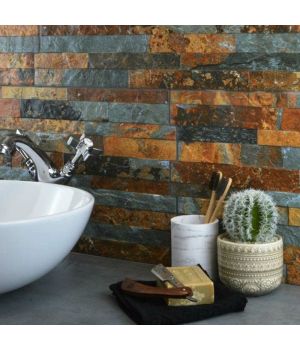
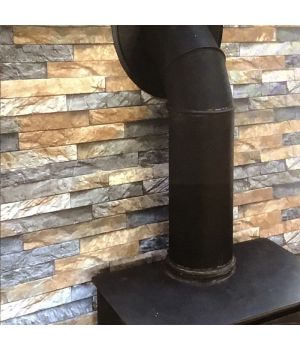
For feature walls, fireplaces and entrance areas, multi-slate tiles and stone cladding produce a level of texture that flat tiles can't replicate. Multi Slate Rustic and Brazilian Multi Slate tiles stack naturally to create richly variegated surfaces, while Marrakesh Multi stone cladding gives a more structured, panel-based result suited to contemporary interiors.

Outdoors, Brazilia Impero Multi with its R11 rating and Rainbow Sandstone paving offer the slip resistance and durability that patios and garden paths require — both handle weathering well and maintain their warm tone through the seasons.

Orange tile styles and materials

This range covers terracotta-effect porcelain, multi-slate tiles, sandstone paving, stone and porcelain cladding and copper/bronze glass mosaics — all sharing the same warm, earthy palette. For rectangular format options that suit some of these styles, our 300x600 floor tiles section is worth checking.

  • Terracotta-effect porcelain — Porto Taupe Brown and Porto Rosso — for rustic, low-maintenance floors and walls that look the part without the upkeep of real terracotta.
  • Multi Slate Rustic and Brazilian Multi Slate tiles for richly coloured, naturally variegated floors and feature wall surfaces with real depth and movement.
  • Rainbow Sandstone paving for natural outdoor patios, garden paths and seating areas where a warm, earthy ground tone is the aim.
  • Ledgestone Ocra and Marrakesh Multi stone cladding for textured internal feature walls and external garden or entrance areas requiring a dimensional finish.
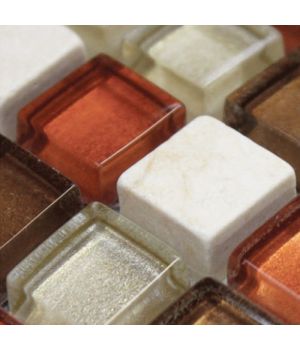
  • Accord Copper Bronze glass mosaics — available in full glass and glass/stone mix — for kitchen splashbacks, shower niches and decorative border strips.

The table below outlines the four main orange tile categories with practical notes on where each performs best.

Type Best for Main benefits
Terracotta-effect porcelain (Porto ranges) Kitchen floors, hallways, living room feature walls Easy-care, durable, warm rustic look without sealing
Multi-slate porcelain/natural tiles Feature walls, fireplaces, floor accents Rich colour variation, natural texture, strong visual character
Sandstone paving Outdoor patios, paths and garden seating areas Natural stone warmth, weathers well, suitable for outdoor use
Cladding and copper/bronze glass mosaics Feature walls, splashbacks, shower niches, borders Dimensional texture or metallic sparkle for accent areas

Orange tile price guide

Prices vary by material — porcelain, natural slate, sandstone or glass mosaic — as well as thickness and whether products are currently on promotion, with mosaics sold per tile rather than per m².

Price band Typical tiles Best for
Value — approx. £17.97–£25/m² Ledgestone Ocra cladding and selected multi-slate or porcelain options Feature walls, larger floor areas and budget-led projects
Mid-range — approx. £25–£35/m² Porto Taupe Brown, Porto Rosso, Brazilia Impero, Multi Slate Rustic, Brazilian Multi Slate Kitchen and hallway floors, fireplace surrounds, indoor feature walls
Premium — approx. £35–£45+/m² Rainbow Sandstone paving, Marrakesh Multi stone cladding; Accord Copper Bronze mosaics priced per tile Outdoor patios, external cladding and decorative splashback panels

Orange tiles FAQs

Q: Are orange and terracotta-effect tiles suitable for small kitchens or bathrooms?

A: They can work well — keep large surfaces to one or two walls and pair with white or off-white elsewhere to stop the warmth from feeling heavy in a compact room.

Q: Can I use orange tiles on both walls and floors?

A: Several porcelain options in this range carry dual wall and floor ratings — always check individual product specifications, particularly slip-resistance ratings, before using on floors.

Q: Which orange tiles are best for outdoor patios and garden paths?

A: Rainbow Sandstone paving and Brazilia Impero Multi R11 are both suited to outdoor use — the R11 rating on the Brazilia confirms adequate slip resistance for wet outdoor surfaces.

Q: Do natural slate and sandstone tiles need more maintenance than porcelain?

A: Yes — natural stone is porous and benefits from sealing on installation and periodically thereafter, whereas porcelain requires no sealing and is simpler to keep clean long-term.

Q: How can I stop orange tiles from overwhelming a room?

A: Use orange as a feature wall or floor accent and keep surrounding surfaces neutral — white, off-white or mid-grey walls and simple fixtures let the tile colour breathe without dominating.

Spread The Cost With 0% Finance Easily With Klarna & ClearPay