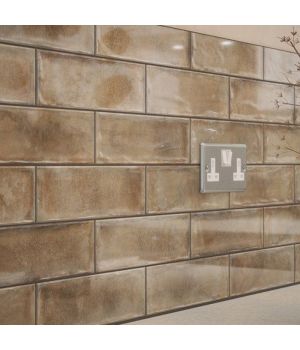
Metro Wall Tiles
Subway Wall Tiles
Metro tiles work across an unusually wide range of applications: classic splashbacks, shower walls, half-height bathroom panelling and feature walls in both contemporary and traditional interiors. The format is simple; what changes is the finish, colour and layout.
What are metro wall tiles?
Metro wall tiles are rectangular wall tiles that take their cue from the glazed brick tiles used in subway and underground railway stations — most famously the London Underground — from the late 19th century onward. That heritage is why they are also widely called subway tiles, though both names refer to the same basic format: a small, smooth-faced rectangle, typically in a 2:1 width-to-height ratio, laid in a staggered brick-bond pattern on a wall.
The most common format is the 10x20cm tile, though the range here spans several sizes to suit different wall areas and design intentions. Smaller metros feel more intricate and detailed; larger rectangular formats have a cleaner, more contemporary read.


Choosing metro wall tiles for each room
Metro tiles are one of the most forgiving wall tiles to choose for a specific room because the format is so well understood — by homeowners, tilers and kitchen and bathroom designers alike. The decisions that actually need making are finish, colour and how much of the wall gets tiled.
For kitchen tiles, the splashback is the most common application, and practicality should drive the decision as much as aesthetics.
Kitchen tips:
- Glazed porcelain and ceramic metro tiles wipe down with minimal effort behind a hob or sink — a smooth, non-porous surface is genuinely the right choice in this position, not just a style preference.
- Coordinate the metro tile colour with either the worktop or the cabinet finish, not both — one visual anchor keeps the scheme coherent without making the tile feel overly matched.
- Running the splashback from worktop height up to the underside of the wall units only is the most practical and cost-effective approach for most kitchens — a full wall of metro tiles works well but requires more material and more cutting around sockets and windows.
- A contrasting grout colour on a kitchen metro splashback makes the grid pattern more visible, which suits bold colour choices — for quieter neutral schemes, a tone-on-tone grout keeps the wall calmer.
For bathroom tiles and other rooms, the considerations shift toward moisture performance, panelling height and how the tile interacts with other surfaces in the space.
Bathroom and other room ideas:
- Porcelain and ceramic metro tiles are fully moisture-resistant and suitable for shower walls and wet areas — there is no need to specify a different product for a wetter zone within the same room.
- Half-height metro tiling in a bathroom — from the floor to approximately 1.2 metres — with paint above is a classic approach that reduces cost, reduces cleaning area and still delivers the metro wall character.
- Full-height metro tiling in a shower enclosure eliminates the maintenance concerns of a painted or plastered wall behind a shower — a practical and long-term choice even if it costs slightly more upfront.
- In a hallway, a metro-tiled dado from skirting board to mid-wall height handles contact-point scuffs and marks more easily than paint and gives a period-appropriate finish in Victorian and Edwardian properties.
- A fireplace chimney tiled from hearth to mantel in a dark matt metro tile makes a strong feature wall in a living room or dining space without requiring the rest of the room to follow the same scheme.
Compare metro wall tile finishes
Three finishes, three different results from the same rectangular format. Here is how they compare for everyday wall applications.
| Finish | Main benefits | Best room uses |
|---|---|---|
| Gloss metro tiles | Reflects light, brightens the wall and gives the classic subway-tile look most people recognise. | Kitchen splashbacks, small bathrooms, shower walls and any room where brightness is a priority. |
| Matt metro tiles | Softer finish with no glare — works well with dark colours and contemporary interior schemes. | Modern bathrooms, feature kitchen walls, hallway dados and living-room fireplace surrounds. |
| Bevelled metro tiles | Chamfered edge creates shadow lines between tiles, adding physical depth and surface interest. | Well-lit bathrooms and kitchens where side or raking light will bring out the bevel detail. |
Metro wall tile prices
Metro tiles sit at one of the most accessible price points in the wall tile range, which is part of their enduring appeal — you can tile a kitchen splashback or a full bathroom in a quality porcelain metro tile without stretching the budget significantly. Prices vary by material, finish and size, and the product grid always shows live pricing and any deals currently running.
| Price band | Approx. price per m² | Typical products |
|---|---|---|
| Good-value | Around £15–£25 per m² | Plain gloss or matt metro tiles in white, cream and grey — the everyday workhorse of the range. |
| Mid-range | Around £25–£40 per m² | Bevelled metro tiles, wider colour options, larger rectangular formats and premium gloss finishes. |
| Premium | Around £40–£55+ per m² | Designer metro tiles, specialist colours, textured or handmade-effect surfaces and larger plank-style metro formats. |


Metro wall tiles FAQs
What size are metro wall tiles usually?
The classic format is 10x20cm — a 2:1 rectangle — though the range here includes other sizes. Larger rectangular formats give a cleaner, more contemporary result while smaller tiles feel more traditional and detailed.
Are metro wall tiles suitable for shower areas?
Yes. Glazed porcelain and ceramic metro tiles are non-porous and fully moisture-resistant. They are a practical and long-term choice for shower walls and wet-room enclosures.
Can I use metro wall tiles behind a kitchen hob?
Yes. Glazed porcelain and ceramic handle heat and cooking residue well in this position. A smooth glazed surface is easy to wipe clean after cooking.
Should I choose gloss or matt metro tiles?
Gloss reflects more light and suits classic schemes or rooms that need brightening. Matt works better with dark colours and gives a softer, more contemporary result.
Can I lay metro tiles in a herringbone pattern?
Yes. Herringbone works well with standard rectangular metro tiles. It requires more careful setting out and increases waste slightly due to more edge cuts, but the result is striking.