Wood Tiles
-
Cedar Brown Wood Effect Porcelain Tiles£ 17.97 /m2 Regular Price £30.00 /m2 -
Impact Brown Wood Effect Porcelain Tiles£ 17.97 /m2 Regular Price £25.00 /m2 -
Curly Oak Dark Wood Effect Porcelain Tiles£ 17.97 /m2 Regular Price £26.50 /m2 -
Noicy Grey Wood Effect Porcelain Tiles£ 17.97 /m2 Regular Price £25.00 /m2 -
Grand Wood Effect Rustic Chocolate Porcelain Tiles£ 29.99 /m2 Regular Price £42.00 /m2 -
Grand Wood Effect Natural Cold Brown Porcelain Tiles£ 29.99 /m2 Regular Price £45.00 /m2 -
Mumble Honey Wood Effect Anti Slip Porcelain Tiles£ 39.97 /m2 Regular Price £56.00 /m2 -
Mumble Natural Oak Wood Effect Porcelain Tiles£ 39.97 /m2 Regular Price £45.50 /m2 -
Mumble Wenge Wood Effect Porcelain Tiles£ 39.97 /m2 Regular Price £42.00 /m2 -
Tarima Roble Wood Effect Porcelain Tiles£ 31.95 /m2 Regular Price £36.00 /m2 -
Alder Natural Wood Effect Porcelain Tiles£ 17.97 /m2 Regular Price £29.50 /m2
Wood Effect Porcelain Tiles Benefits Compared To Natural Wood Flooring
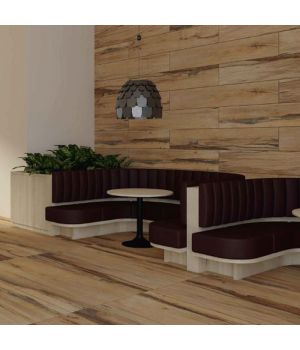
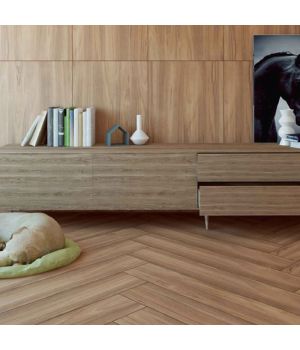
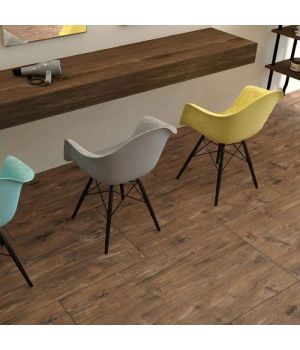
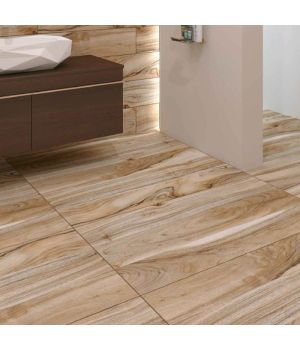
Wood-effect porcelain tiles give you the grain, texture and warmth of timber flooring with none of the upkeep. No sanding, no sealing, no warping in wet rooms, no scratches that won't buff out. The surface is printed and embossed to replicate real wood closely enough that the visual effect in a finished room is genuinely convincing — particularly in plank format laid in straight runs or herringbone.
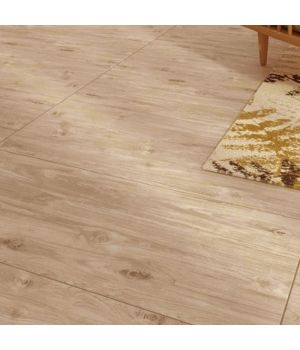
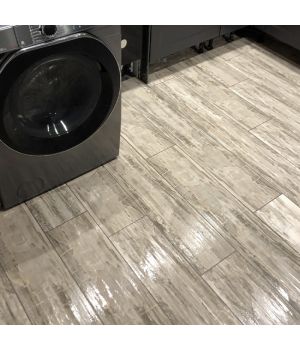
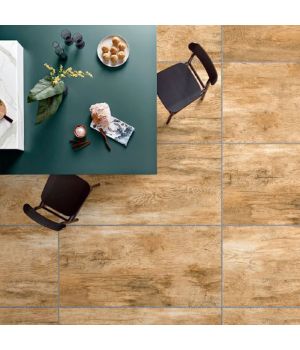
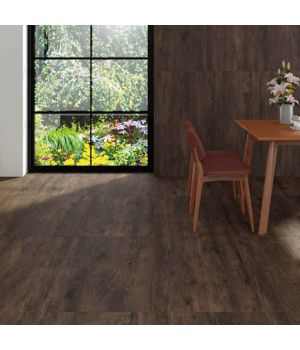
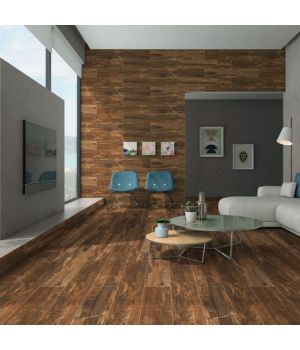
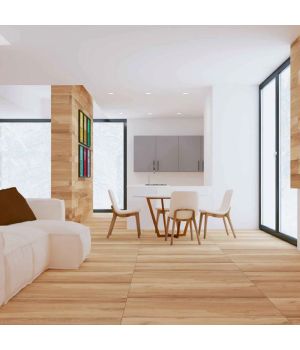
This collection covers a wide tonal range: light cream and white oaks for airy Scandi-style kitchens, soft greys for contemporary open-plan spaces, warm mid-browns and richer chocolate tones for more traditional or rustic looks, and outdoor-rated maroon planks for garden terraces and patios. Whether the project is a kitchen floor, a bathroom feature wall, a hallway, a living room or an outdoor paved area, there's a wood-effect porcelain here sized and finished for the job.
Porcelain keeps moisture absorption extremely low, handles underfloor heating well and needs only a mop to stay looking good. For a full side-by-side breakdown of how it compares with the real thing, our guide to wood effect tiles vs natural wood floors is worth reading before you decide on a direction.


How to choose the right wood effect tiles
Wood-effect porcelain is one of the most flexible tile categories on the site — it spans indoor and outdoor use, several colour families and multiple formats. Narrowing by room and then by tone tends to work better than browsing by colour alone.
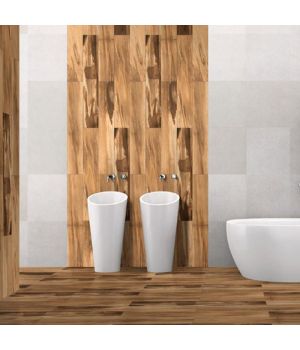
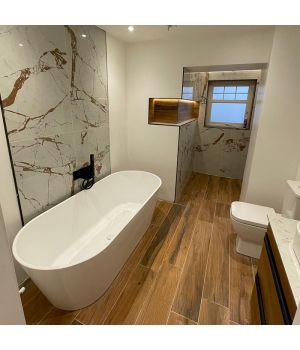
Kitchens, hallways and open-plan living rooms are where plank-format wood-effect porcelain performs best — the longer format emphasises the grain and the low-porosity surface handles spills and grit without complaint. For bathrooms, wood-effect tiles add warmth that plain stone or marble-effect tiles rarely match; for ideas on how these look in a finished bathroom scheme, the gallery of stylish bathrooms with wood effect tiles shows several approaches worth considering. The broader wood effect tiles category covers the full range across porcelain and ceramic in more detail. If you're weighing up porcelain against a softer option, wood effect vinyl tiles offer a warmer, quieter alternative at a lower price point.
Outdoors, choose tiles specifically rated for external use and check the anti-slip rating — the Fire Wood Maroon and Mumble ranges are designed for patios, paths and garden steps where grip and frost resistance matter. For indoor rooms with underfloor heating, any standard porcelain plank in this range will conduct and retain heat effectively.
- Kitchens and open-plan floors: Mid-brown or grey planks in larger formats; low maintenance and highly durable for the busiest room in the house.
- Bathrooms and en suites: Light oak or cream wood-effect tiles for walls and floors; the warm tone softens what can easily become a cold-feeling room.
- Hallways and landings: Darker tones like chocolate or warm brown hide dirt better in high-traffic areas; herringbone layout adds visual interest without additional cost.
- Living rooms and dining areas: Wider planks in cream, grey or mid-oak for a clean, contemporary base that suits most furniture styles.
- Outdoor patios and garden paths: Anti-slip, frost-resistant outdoor-rated planks only — check the product specification before ordering for any external installation.
Wood effect porcelain vs real wood and vinyl
Wood-effect porcelain is the most hardwearing of the three options. The tile surface won't scratch from chair legs or pet claws the way real timber does, it won't swell in a bathroom or kitchen, and there's no maintenance schedule — no oiling, no resealing, no periodic sanding back. It's a floor you lay and largely forget about for decades.
Real wood floors have a quality no printed porcelain fully replicates — the feel of genuine timber underfoot, the way it develops character over time, and the ability to sand back and refinish a surface that has seen better days. The trade-offs are real: real wood costs more upfront, dislikes moisture and humidity and demands more care over its life. LVT wood-effect floors sit between the two: softer and quieter underfoot than porcelain, more water-resistant than real wood, easier to fit yourself and lower in upfront cost — though for very high-traffic areas over the long term, porcelain outlasts it.
| Option | Best for | Main benefit |
|---|---|---|
| Wood effect porcelain tiles | Kitchens, bathrooms, hallways, outdoor patios and heavy-traffic floors | Very hard-wearing and moisture-resistant; no sanding or sealing ever needed |
| Real wood flooring | Living rooms and bedrooms where genuine timber character is the priority | Authentic warmth and grain; can be sanded and refinished multiple times |
| Wood effect vinyl / LVT | Bedrooms, living rooms and rentals where comfort and DIY installation matter | Softer and quieter underfoot than porcelain; lower upfront cost |


Wood effect tiles price guide
The majority of wood-effect porcelain planks on this page are priced at around £17.97/m² — Cedar Brown, Noicy Brown and Grey, Impact Brown, Curly Oak and Alder Brown all fall in this band, making them strong value for kitchen and hallway projects. Fire Wood Maroon outdoor paving sits at about £19.97/m². Grand Wood Effect ranges step up to £29.99/m² for larger formats and more detailed finishes, while the Mumble range reaches around £39.97/m² for its anti-slip profile and premium design. Over a floor's lifetime, the absence of sanding, refinishing and periodic sealing costs means wood-effect porcelain typically works out cheaper than real wood despite comparable upfront prices in some ranges.
| Price band | Typical price per m² | What you get |
|---|---|---|
| Value wood effect porcelain | £17–£20/m² | Core plank ranges including Cedar, Noicy, Impact, Curly Oak and Fire Wood Maroon outdoor paving |
| Mid-range wood effect porcelain | £25–£32/m² | Grand Wood ranges for larger spaces with more detailed grain and finish options |
| Premium wood effect porcelain | £37–£42/m² | Mumble wood-effect tiles with anti-slip surface and high-end design detail |
Wood effect tiles FAQs
Q: Are wood effect tiles suitable for both floors and walls?
A: Primarily floors, but plank-format wood-effect porcelain can be used on feature walls in bathrooms and living rooms. Check that the specific tile is rated for wall use before installing vertically.
Q: Can I use wood effect porcelain tiles in bathrooms and kitchens?
A: Yes. Porcelain's very low moisture absorption makes it an excellent choice for both rooms — it won't swell, warp or stain the way real timber does in humid or splashy conditions.
Q: Do wood effect tiles work with underfloor heating?
A: Yes. Porcelain conducts and retains heat efficiently, making it one of the best flooring materials for electric and water-fed underfloor heating systems. Follow your installer's guidance on adhesive and expansion gaps.
Q: How do wood effect tiles compare to real wood for maintenance?
A: Wood-effect porcelain needs only regular sweeping and mopping. Real wood requires periodic sanding, oiling or lacquering — a more involved upkeep commitment over the floor's lifetime.
Q: Can I use wood effect porcelain tiles outdoors?
A: Yes, but only with outdoor-rated, frost-resistant options such as the Fire Wood Maroon and Mumble ranges. Standard indoor wood-effect tiles are not designed for external use or frost exposure.